
Israeli Prime Minister Benjamin Netanyahu and his former Minister of Defence Yoav Gallant were issued with International Criminal Court warrants for their arrest on Thursday. Whilst the United States and Israel inevitably slammed the decision, it was ultimately a good day for international law.
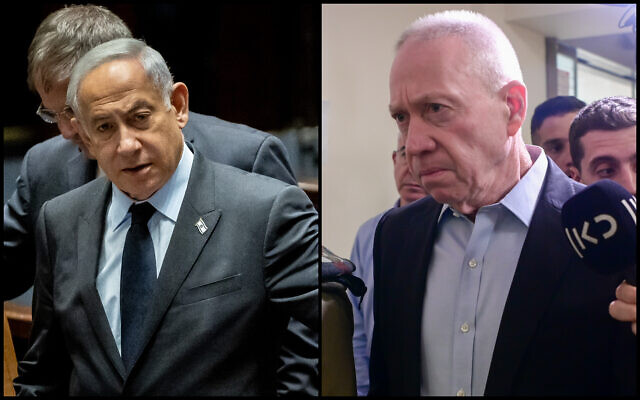
As a result of his arrest warrant, Mr Netanyahu, his former Minister of Defence Yoav Gallant and others indicted now face significant international restrictions on where they can travel to. 124 countries have International Criminal Court obligations, including New Zealand and Australia, where the warrants are valid and can be enforced. It is also interesting to note that much the Middle East views the I.C.C. as a western construct in that it was established and is run by western nations. It is interesting because several of those Middle East nations such as Saudi Arabia have said that they will enforce the arrest warrant of a court system that they do not like if any of the indictees arrive on their soil.
In Europe, the Netherlands, Belgium, Ireland, Austria and Slovenia have said that they will arrest Mr Netanyahu if he arrives in their territory; Hungary said Mr Netanyahu is welcome, whilst Germany, Italy, the United Kingdom have mixed views – whilst not agreeing with the decision, all appeared to believe that they have an obligation to do so.
The arrest of Mr Netanyahu can only be viewed as good for the long term prospects of the International Criminal Court, until then, was viewed by third world countries as being rigged against them. This was borne out by almost exclusively third world leaders being targetted. Aside from bringing to account the leader of one of the most divisive governments on the face of the planet to account, it also directly challenges the apparent immunity of western leaders and their sympathizers from being held to account.
There are some limits though – which in the case of the United States are defined by some extreme – retaliatory responses. When George W. Bush was President of the United States, he introduced – I think at the behest of either Vice President Dick Cheney or Defense Secretary Donald Rumsfeld (both of whom are known to hold quite hardline views on national security) – The Hague Invasion Act, 2002. This authorizes the use of American armed forces to free any Americans being held in the Hague or other countries on charges of war crimes. The solitary attempt to rescind the Act in question failed in the Senate in 2022. I cannot see it being rescinded under a Donald Trump presidency, and if there is any President in the yet to be written history of the U.S. who might be prepared to give effect to the H.I.A., Mr Trump is a strong contender.
Whilst I do not imagine other nations being prepared to go to the same lengths that America has authorized its Government, I can believe that they would stop co-operating with the Hague.
This brings us to an interesting question: what will the New Zealand Government do? To date, whilst its reaction to Israeli atrocities has been very disappointing, perhaps reflecting the traditional conservative standpoint that Israel is more just than Palestine, the N.Z. Government to its credit has blacklisted HAMAS and Hezbollah. Neither work in the best interests of Palestine, despite HAMAS being the only armed force that can offer Israel any resistance, and adding them to the terrorist blacklist
Of this development, one can only guess what Minister of Foreign Affairs, Winston Peters is going to do. He might do nothing, or he might in one of those increasingly rare instances where New Zealand goes against the current, accept I.C.C. ruling and ask to arrest Messrs Netanyahu and/or Gallant should either set foot on New Zealand soil. It would be a great day for international law and a great day for our standing in the global south, which has for the most part lost any respect it had for the western hemisphere.
What do you think?
 Leftist Kiwi Writes