
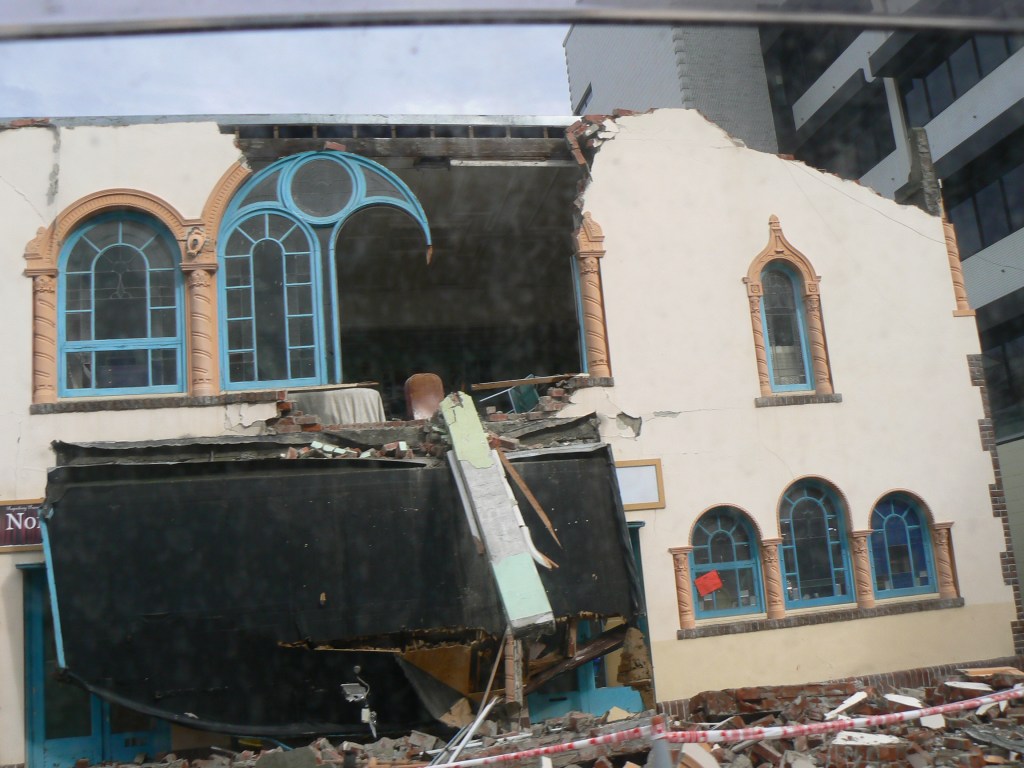
When New Zealand went to bed on 03 September 2010, probably no one had given the slightest thought to a seismic odyssey beginning in Canterbury in the small hours of the following morning. Fewer still imagined the horror it would unleash 172 days later.
15 years later with brutal lessons learnt, it is not surprising many in Christchurch and elsewhere are upset at the changes coming in earthquake compliance. This week the Government announced changes to rules around seismic strengthening requirements. It claimed that the rules are strangling businesses and building owners with undue compliance requirements.
New Zealand is a seismically prone country straddling two tectonic plates, with the boundary being a subduction zone off the east coast of the North Island, before turning into a strike slip fault zone as it crosses the South Island. We get 14,000+ earthquakes per annum. Most are too small to be felt, but about 150-250 per annum are strong enough to be felt and – if they are close/shallow enough – potentially cause damage and disruption.
I worked at Environment Canterbury on Kilmore Street. On the day of the fatal 22 February 2011 aftershock, I was in an office on the fourth floor of a five story building. It was constructed around 1986 and was very similar in design to the ill-fated C.T.V. building which collapsed in the 1251 hours aftershock, killing 115 people. When the aftershock hit, I had a good view of a two story masonry dwelling on the corner of Chester Street West and Montreal Street. The masonry wall facing the E.C. vehicle park and staff park completely collapsed, and when the dust cleared, I was looking into bedrooms.
Across the road from the house, at the other end of that segment of Chester Street, the Durham Street Methodist Church completely collapsed, killing three men who had gone to see if they could remove the organ from the church. It had a yellow sticker, indicating only essential activities in the building could be carried out.
The 22 February 2011 aftershock killed 185 people. 133 of these died in the C.T.V. and P.G.C. building collapses. The next largest contributor to the 2011 earthquakes death toll was collapsing unreinforced masonry structures, which were responsible for 42 of the 52 other fatalities. The worst of these was when a collapsing facade came down on a bus in Colombo Street.
I understand and respect the fact that Northland and Auckland are not as seismically prone as the South Island, East Cape, Hawkes Bay, Wairarapa, Wellington are. With no significant faults in or near their territory, any strong shaking they feel will likely be from big seismic events elsewhere in New Zealand. With their relative distance from the active seismic zones, seismic compliance is understandably lower on their priority list.
Not all buildings that are on the protected list of heritage buildings deserve their categorization either. The listings make it more complex for building owners who know that the most pragmatic solution would be to simply demolish the structure/s in question and let new premises be constructed. In Greymouth, where many of the buildings in the business zone are of early 20th Century construction, many building owners are facing significant costs trying to bring the buildings up to an acceptable standard. Many of them have compliance ratings lower than 20% of the code. The cost of upgrading the building to comply might be disproportionate to the value of the structure.
Some of the building owners may have relatively simple repairs to make, and have been given what I think is excessive time to rectify them. A look for example at the Earthquake Prone Buildings register for the West Coast, showed a building with a faulty chimney, but the owner has until 2038 to fix it.
However, it would not take a large earthquake, as shown in Christchurch to cause significant damage to masonry structures, particularly in Auckland. The 22 February 2011 aftershock was a magnitude 6.3 at the extremely shallow depth of 5km and an epicentre only 10km southeast of the C.B.D. A shallow magnitude 5.0+ at close quarters (e.g. less than 10km) in Auckland would be enough to cause significant damage to older buildings. The same can be said for Waikato, Coromandel and Taranaki. All of these provinces are likely to have hidden faults capable of generating such medium size earthquakes.
The reason for alarm is just. The Hikurangi subduction zone is coming to the end of its average repose period of about 1,000 years. When it eventually ruptures, the probable megathrust earthquake is likely to reach magnitude 8.8 and will be fault nation-wide. Shaking would probably last about 4-5 minutes. Before then though we have the likelihood of significant more localised, yet no less dangerous ruptures. In north Canterbury, the Hope Fault is at/near the end of its repose cycle of about 130-150 years – its last rupture event was 1888 and was magnitude 7.0-7.3. The Alpine Fault last ruptured in 1717 (+/- 10 years), and has a repose period of about 300-350 years. Even if we take the most generous assessment and say that it ruptured in 1727, that is still 298 years for a magnitude 8.0-8.2 earthquake that will probably last about 3 minutes.
At some point some other New Zealand community will find themselves facing what Canterbury/Christchurch faced in 2010-2011. When it happens will their buildings be ready?
 Leftist Kiwi Writes