
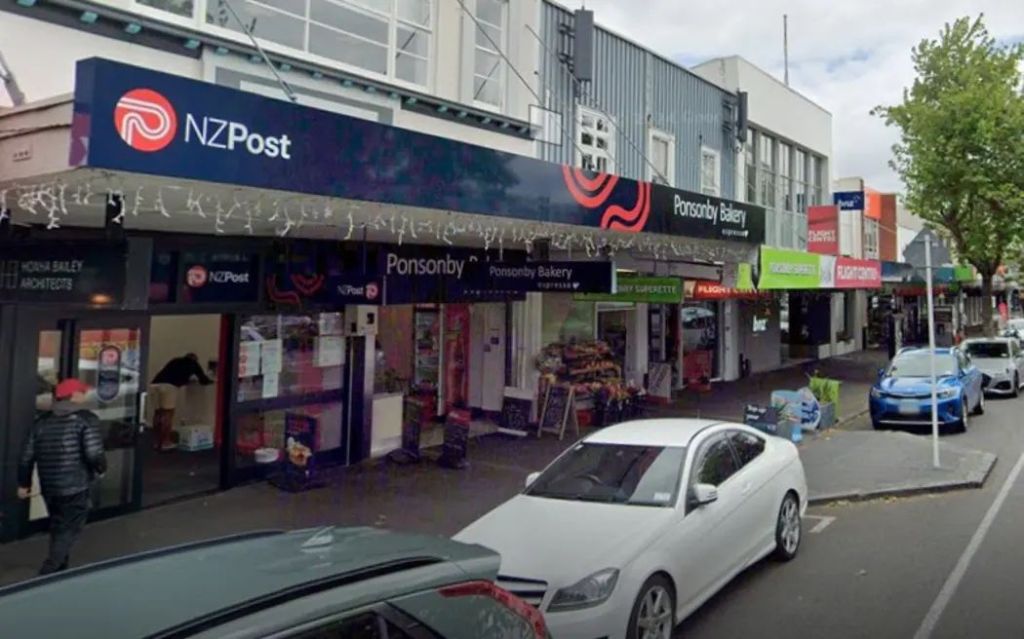
This is a bit of a grumble about large businesses closing and the socio-economic devastation they leave behind, the trends and some local observations.
It stems from the announcement by New Zealand Post that 140+ stores are closing (more on that later), and the apparent lack of consultation with communities, as alleged by some Labour M.P.s including Rachel Boyack (M.P. for Nelson).
In fairness, many large employers have quit rural New Zealand towns over the decades. Toyota used to have an assembly line for vehicles at Thames, which closed decades ago. Reefton, until recently was suffering from the post-Oceana Gold boom where the mining company of that name ran several of the local gold mining operations. Kawerau in the central North Island lost much of its work when 161 jobs were shuttered by the local mill. In Timaru in 2024, despite being an urban area, there was socio-economic devastation when the Smithfield meat works closed with over 250 people affected.
For many small towns a central business district was built around a bank, post office, school, medical centre, Police station and similar amenities. Also present in some smaller localities, depending where on the railway and state highway network they were sighted were also maintenance depots for New Zealand Transport Authority and On Track. Following the reforms of the 1980’s and early 1990’s where the David Lange Government, his successors Sir Geoffrey Palmer and Mike Moore as well as the late former Prime Minister Jim Bolger, all of these began to decline as contracted services were centralised at larger locations or simply done away with altogether.
The current service providers all invariably claim to be committed to serving the community as best as they can, but many do not grasp the impact that are being had on the elderly among others. These sectors of the population spectrum are often not as engaged with the internet, social media and other methods of communication. Post and banking services, for example still need a physical presence in these towns.
I might have thought that New Zealand First, being a party that traditionally supports senior citizens, would have invested more time and effort trying to assure the 65+ age groups, that New Zealand is not moving on without them. For many of these people living in small towns like Fairlie and Kaikoura telephones and written correspondence arriving as physical mail is the only way to make and maintain contact with them.
The recent decision by New Zealand Post to close over 140 stores across the country is just the latest example of centralising or reducing services. Yes, it is true that most mail these days is parcels that can be picked up and delivered by courier companies, of which there are several in New Zealand. The terms of reference for the Digital Action Group at the Office for Senior Citizens, show that up to 25% of people over 65 do not have internet access, a figure that rises to 35% when those older than 75 are included.
Elderly are not the only ones who are being disadvantaged by the progressive reduction of services in rural communities. Lower income areas such as Tairawhiti in the Gisborne region do not get the services and maintenance that they need for infrastructure based on their tax contribution to Crown coffers. I am sure that all Crown agencies, including the Treasury will deny this, but it is something that is hard not to conclude when 3 years after Cyclone Gabrielle there is unrepaired infrastructure that would have been fixed in urban areas by now.
This is something that iwi, locals and non-locals alike are noticing. Tairawhiti and eastern Bay of Plenty are low priority for Government support, and even flood events last week have so far only prompted about $1.2 million in funds to be dispersed for relief projects. Small towns are some of the more vulnerable parts of New Zealand to climate change, which will not necessarily present as global warming, per the media. This is a situation highlighted by A.A. New Zealand making the decision not to grant insurance for flood prone properties in Westport.
This is the price we pay for the neoliberal ideology of letting more powerful economic forces promoting the acquisition and gutting of businesses. It is not a phenomenon unique to New Zealand. Every country where neoliberal market forces are at work, this has happened. A small number of people, namely directors and shareholders have done well out of it, whilst the blue-collar work force that made these businesses tick are left to make their own way.
In election year with living costs rising, and a Prime Minister who said in 2024 that it was not the Government’s role to intervene – even when large numbers of people have livelihoods at risk – in the business decisions that lead to closures. Maybe not, since it is private business, but ensuring that there is support for workers should be mandatory irrespective of which political stripe the Prime Minister adheres to.
 Leftist Kiwi Writes