
As New Zealand cleans up after yet another storm, questions are once again starting to come out about our willingness to acknowledge climate change is here and that other nations are starting to take measures that may impact on New Zealand.
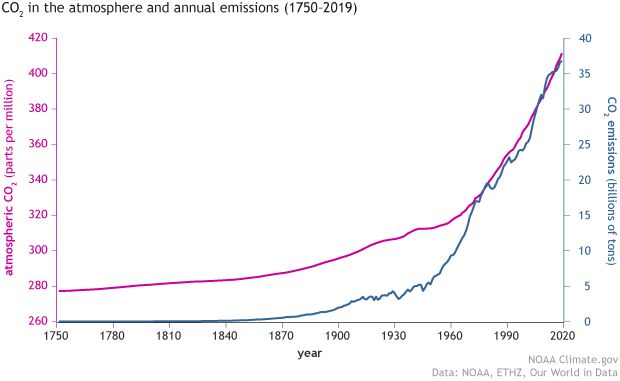
The denialists will say that the weather has always changed. What they ignore is that since 1750, or about the time that the Industrial Revolution started, there has been a steady and sustained rise in the amount of carbon measured in particules per million (p.p.m) in the atmosphere. The last time the average carbon level was 400p.p.m+ was nearly 3 million years ago. What sets this aside, is naturally carbon levels would have fluctuated across centuries, even millennia in that time, as opposed to rising steadily for 270+/- years straight.
The climate change events that people thought Vice President Al Gore was being alarmist about when he mentioned the The Day After Tomorrow*, are now happening. I was not convinced myself until 2021 when across the space of 5 months, the New Zealand Metservice was forced to issue 3 red warnings for two heavy rainfall and one windstorm event. It made me stop and think about the other recent events that have gone on around the world – the strengthening and lengthening tornado season in the United States; the increased power and overall frequency of hurricanes/cyclones/typhoons that are occurring; the increasing frequency of severe storms (Riyadh, Saudi Arabia; Kumamoto, Japan; Mallorca, Spain).
One might say, “but it is meant to be global WARMING”. Yes, that is partially true, but what is being ignored is how global warming as some call it, is enabling much larger volumes of freshwater to be mobilised as the ice cap melts, which is interfering with factors such as rainfall. The climate oscillations between El Nino and La Nina are becoming more pronounced, both in terms of frequency, but also duration and intensity. For every 1 degree C that the temperature increases, the capacity of the atmosphere to hold water vapor increases 7%. As the latest predictions are now for a possibly 3 degrees C temperature increase, that means a potential 21% increase in the ability of the atmosphere to hold water now exists. This might not seem like much, but it means that instead of 300mm of rain falling in a day in a moderate size event, one might get 360mm, which may not seem like much, but when one puts that much rain across every square kilometre of catchment surface area, that is a lot of extra water on the move.
Now that climate change is here. New Zealand is going to increasingly find itself being made to make calls that politicians will generally shy away from. These include working out when to definitively say to property owners, “
“Sorry, we cannot insure this any more – it is too prone to landslides and/or flooding”, or
“Okay, you want to buy property in one of these areas? Fine, but here is what your insurance will cost. Still keen?”
Politicians trying to deny that climate change exists are also going to face some harsh realities if New Zealand is found wanting in terms of upholding its Free Trade Agreements with other nations. Many nations now are starting to require climate change clauses in their F.T.A.’s. Others are looking at things such as the footprint of industries in terms of how much resources are consumed to get the end product. Small nations like Singapore, are announcing measures, such as a sustainable fuel levy. About 4,200 passengers a week (assuming the Singapore Airlines A350-900 that flies to Christchurch is full) are affected. Climate change is more than just strategic economic conditions.
It affects some of New Zealand’s biggest income earners, such as Whale Watch Kaikoura. Whales come to the deep sea canyon for the rich abundance of plankton. Plankton is one of many maritime lifeforms that are being affected by the changes in sea water, such as salinity, temperature, sea currents and so forth. As whales are significant mobile carbon sinks, as well as a major tourism revenue generator in New Zealand, protecting them and their ecosystem to me seems like common sense, not Green Party hogwash.
Climate change will – and already is – affecting farmers. Swings between droughts like those in 1999 and early 2013 and severe flood events like the May 2021 red warning rainfall event in Canterbury. That caused many rivers to overflow and reclaim their old channels. So much fell that some rivers avulsed out of their existing channels and into ones not recently occupied. It washed away stop banks and forced thousands of evacuations. It brought into question the integrity of key infrastructure around the province, leaving questions that some are still wrestling with today.
Will New Zealand rise to the challenge of asking ourselves what we are going to do about climate change, or is the new status quo of increasingly frequent storms of worsening intensity, acceptable?
*NOT to be confused with the The Day After (a 1984 B.B.C. nuclear holocaust docudrama).
 Leftist Kiwi Writes