
It was signalled during the 2023 General Election campaign that National would crack down on beneficiaries. Even before National signalled so, few – if any – watchers were surprised such a move was coming. In fact most expected it. What they might not have expected was the sheer callousness of some of the announcements on Monday, that even for a group of people National rank and file generally despise, a few members might have quietly winced at.
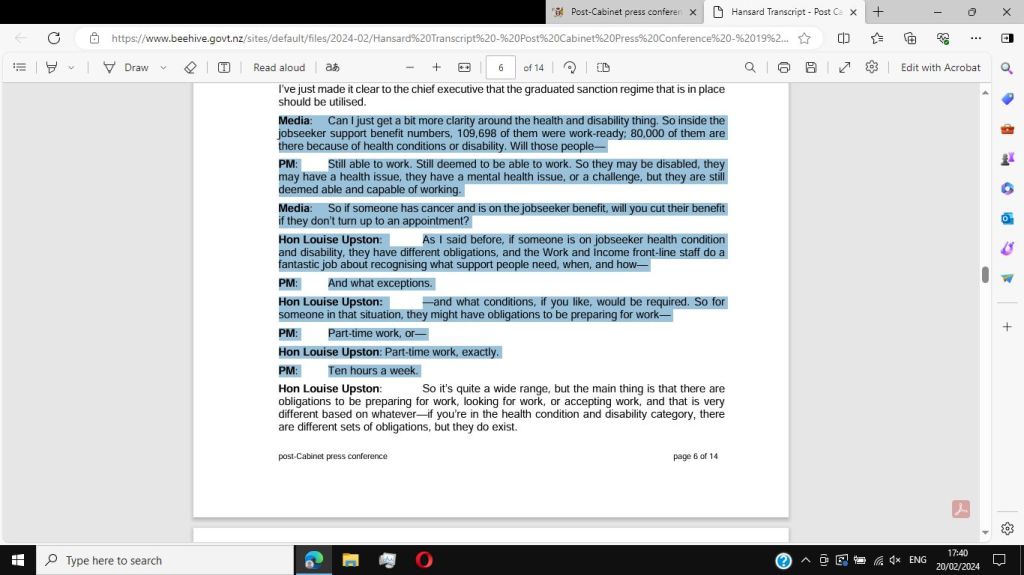
Louise Upston, Minister for Social Development, made an announcement on Monday that widespread changes were coming to benefits. The changes included
I was on a benefit for 7 years from January 2000 to about July 2007, when I was medically cleared to start working full time in a supermarket job. I got $180p/w and paid my parents $30 board a week, cooked once a week and helped Dad with jobs around the property. During those 7 years, the benefit I was on barely changed – I think it increased to $185 during one of the latter years, but given how much the cost of living had increased in that time, it didn’t come close to covering the increased expenditure.
I went back on a benefit in May 2011 after my job at Environment Canterbury came to an end. In the nearly 4 years I was off it, the benefit had increased to $206p/w. However Ministry of Social Development umbrella agencies and in particular Work and Income had developed a culture of suspicion in their offices. You could feel it no matter which office you went into. A lack of empathy with clients at times bordering on hostility. I began to notice another thing – inefficiency, which ranged from dragging out appointment processes as much as possible; entering and re-entering ones data that should have been on the clients file long ago and not informing clients of the full range of help that was available to them. It was almost like they didn’t to help, even though we are the whole reason for their department existing. I and other friends who were dealing with Work and Income New Zealand at the time agreed that if the then Minister Paula Bennett wanted to do something useful, she could start by resetting the culture of the place. She did not. But her combative nature and dislike of anyone questioning her time on the benefit as a solo mother when she was pushing back at that very group of people earnt her the reputation of pulling the ladder up behind her.
In her defence though, nor did her successor, Labour Minister Carmel Sepuloni. Ms Sepuloni was one of the most inefficient Ministers of the Jacinda Ardern Government. In her time in office, totalling all of the six years that Ms Ardern and her successor Christopher Hipkins held the Prime Ministership, no significant policy announcements of any sort were released by her.
The very vast majority of people on benefits or other support will work if there is work that they are in a condition to do. Contrary to what the right will tell you, being on a benefit is stressful. I have already mentioned the inefficiencies of Work and Income New Zealand, but there are other reasons why few enjoy it, not least the most obvious: trying to live from payment to payment with no room for manoeuvring. No one enjoys the regular check ups with Work and Income to see what you are doing to get a job, even if you are making an honest effort. No one enjoys the substantial paperwork and information gathering that goes on. There are numerous ways that the situation for those needing the assistance of Work and Income New Zealand; Studylink and so forth could improve without huge changes in Government social policy. Two of them are financial:
- A Capital Gains Tax/Land Value Tax/Wealth Tax/Luxury Goods tax – any one of these taxes when properly introduced could help fund the necessary support for the New Zealand welfare system
- Closing tax loopholes that enable existing tax obligations to be avoided – existing tax regulations currently let an estimated $7 billion slip out of the country per annum
- An internal overhaul of M.S.D. and its umbrella agencies to address what I suspect is wastage running into the millions of dollars across them all – do we actually NEED W.I.N.Z., or are the suggestions that it be abolished that I occasionally see on Twitter not such a bad idea after all?
The problem with the challenges that Ms Upston has promised, like her predecessors, is that she does not seek to address the changes at the root which cause them to be on the dole, or other benefit in the first place. Much of the problem, particularly in low-income areas such as Northland, West Coast and East Cape is that decades of neoliberal economic development have seen the small rural towns slowly but steadily get deprived of all of their social services. Banks, schools, medical centres, major businesses have all relocated to other areas. With their departure, the employees have moved along too leaving few people to pay rates to cover infrastructure such as roads, sewerage and schoools, which struggle to justify their continued maintenance and ultimately fall into disrepair.
Ms Upston cannot fix this herself. However, even if she could, I am not sure that National in their current contempt for people who did not necessarily make a choice to be on a benefit, actually intend for her – or her successor – to do so.
 Leftist Kiwi Writes